Texarkana, TX vs. Arkansas: What the Price Gap Actually Measures
August 13, 2026
August 13, 2026
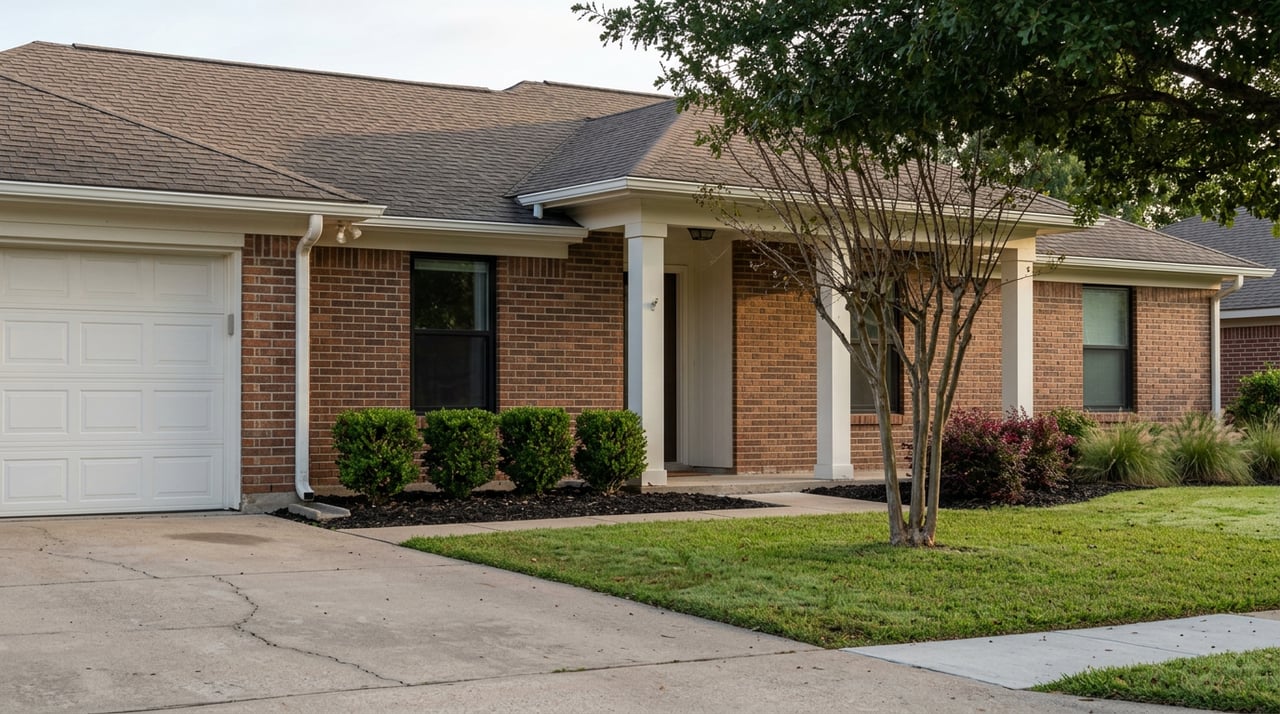
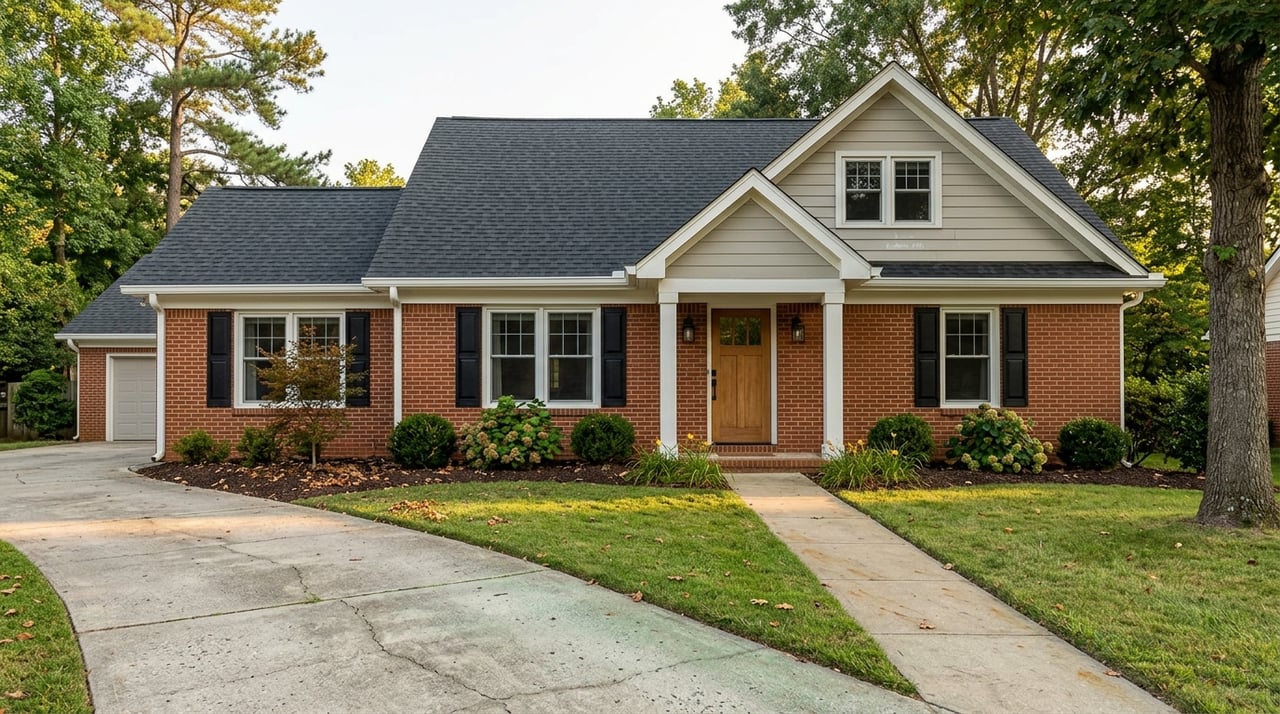
Stand in the right spot on State Line Avenue and you can put one foot in Texas and the other in Arkansas at the same time. It's a photo almost everyone in Texarkana has taken at least once. The joke works because the two sides look the same from the sidewalk: the same brick ranch houses, the same church steeples, the same pine tree line running behind the subdivisions. What the photo doesn't show is that the house on the Texas side and the house on the Arkansas side answer to two completely different tax systems, and that difference does more to your monthly payment than square footage or lot size ever will.
Most buyers comparing the two sides start with a Zillow number and stop there. As of May 31, 2026, Zillow put the typical home value at $202,958 on the Texas side of Texarkana and $169,100 on the Arkansas side, a gap of nearly $34,000. That's a real number. It's also the wrong place to stop, because it tells you what a typical house costs to buy, not what it costs to keep, and keeping a house here runs through two tax structures that are both shifting in 2026.
Home value is where most comparisons begin and end, but it isn't where the real difference shows up. Census data covering 2020 through 2024 put median monthly owner costs with a mortgage at $1,262 on the Arkansas side versus $1,608 on the Texas side. Line that up next to current values and the pattern holds: even where list prices sit close, the ongoing carrying cost can diverge sharply, and the divergence happens after closing, not before.
| Texarkana, TX | Texarkana, AR | |
|---|---|---|
| Typical home value (Zillow, May 2026) | $202,958 | $169,100 |
| Median monthly owner cost with mortgage (Census, 2020-2024) | $1,608 | $1,262 |
| State income tax | None | Yes, with a border-city exemption for in-city residents |
| City property tax rate | $0.65 per $100 valuation | Set in mills, layered by city, county, and school district |
| 2026 homestead protection | $140,000 off school district taxable value | Set locally, varies by exemption type |
That bottom row is where a lot of side-by-side comparisons quietly fall apart, because Texas and Arkansas don't even measure property tax the same way. Texas quotes a flat rate per $100 of value. Arkansas quotes mills, where one mill is a tenth of one percent applied to an assessed value that's typically 20 percent of market value. You can't set "$0.65 per $100" next to "10.5 mills" and know which one actually costs more without running the assessed-value math for the specific house in front of you.
Here's a number that looked dramatic earlier this year and deserves a second look before anyone builds an offer around it. Redfin reported the median sale price in Texarkana, TX up 42.5% year over year to $317,000 in February 2026, on a total of 27 homes sold that month. Twenty-seven sales is a small enough pool that a handful of higher-priced closings can swing the median without a single existing home actually gaining value. A 42.5% jump sounds like a market on fire. In a market this size, it can just as easily mean the mix of homes that happened to close changed, not that the market did.
That distinction matters for anyone using a headline median to time an offer or judge whether a listing is priced fairly. In a market moving hundreds of sales a month, a median is a reasonably stable signal. In a market moving two or three dozen, treat it as a data point worth a second question, not a verdict.
The usual case for the Arkansas side leans on lower property taxes. The usual case for the Texas side leans on no state income tax. Both are true, and both are less clean in practice than they sound, because of a rule most people outside Texarkana have never heard of.
Since the Compensating Tax Act of 1949, Arkansas has allowed residents of Texarkana, Arkansas to exempt income earned while living in the city from Arkansas state income tax. That exemption has stood without amendment for decades. In practice, a resident who lives and works inside Texarkana, Arkansas can sidestep the state income tax that applies everywhere else in Arkansas, while Texas residents next door already pay none at all. The two sides end up much closer on income tax than the simple framing suggests, especially for anyone whose income is earned inside the city limits. Income sourced from outside that boundary can still be taxable, which is exactly why this is a conversation for a tax professional who knows the local rule, not an assumption to build a household budget around.
While buyers weigh the Arkansas exemption, Texas changed a number on its own side of the ledger in 2026. Texas school districts are now required to exempt $140,000 of a primary residence's value from school property taxes, up from $100,000 under the prior rule. For a homeowner with a $200,000 house, that shields most of the home's value from the largest slice of a typical Texas tax bill. Homeowners 65 or older, or those with a qualifying disability, can stack an additional $60,000 on top of that, and once the exemption is approved it renews automatically each year without a new filing. Anyone comparing "Texas taxes" to "Arkansas taxes" using a rate they memorized before this change is working from an outdated number.
The Arkansas side had its own recent moment, and it went the other direction. In March 2026, Texarkana Arkansas School District put a 3.5-mill increase on the ballot to help cover roughly $36 million in facility needs, including buildings the superintendent described as decades old. Voters turned it down, 2,169 against to 1,597 for. The increase would have added roughly $70 a year for every $100,000 of home value, small enough that the vote clearly came down to more than dollars. The district hadn't raised its millage in more than 30 years before this attempt.
That vote matters to anyone buying on the Arkansas side right now. The property tax advantage that makes Arkansas attractive on paper held this year, but it held because voters actively chose to keep it that way, not because the number is fixed. A district with $36 million in stated needs and no new revenue source doesn't make that need disappear. It tends to come back to the ballot.
The choice between the Texas side and the Arkansas side of Texarkana isn't a question with one right answer. It depends on your income, your age, whether you'd qualify for a homestead exemption, and how you weigh a property tax rate that's currently stable against one that just went to a vote. Before comparing a listing on one side to a listing on the other, it's worth asking for three specific numbers instead of one median:
None of that shows up on a portal listing. It shows up in county records, in a conversation with a lender who knows both states, and with a broker who has closed deals on both sides of State Line Avenue and knows which questions the sticker price never answers.
Does living on the Arkansas side of Texarkana mean I pay no state income tax at all? Not automatically. The exemption applies to income earned while a resident of Texarkana, Arkansas, under a rule that has stood since 1949. Other Arkansas-sourced income outside that boundary can still be taxable, so it's worth confirming your specific situation before assuming a blanket exemption.
Is Arkansas property tax guaranteed to stay lower than Texas going forward? Not permanently. Texarkana Arkansas School District already brought a millage increase to voters in March 2026 and it failed, but the district's stated $36 million in facility needs didn't go away with that vote. A future ballot measure is a real possibility worth building into any long-term comparison.
Comparing two sides of one state line takes more than two browser tabs open to Zillow. Doris Morris has spent three decades closing deals on both sides of Texarkana, from the assessed-value math to the closing table. Let's Talk Strategy.
Stay up to date on the latest real estate trends.
Before you buy or sell with any other agency, connect with Doris Morris Real Estate. We welcome the opportunity to show you how our concierge approach and proven methods can positively impact your bottom line.