Red Lick, TX Has Its Own Mayor. Your Septic Permit Still Goes Through the County.
August 27, 2026
August 27, 2026
A buyer touring a new build in Red Lick Ranch Subdivision sees a paved street, a mailbox cluster, granite counters, and a city limit sign. Everything about the scene says "finished suburb." Then the option period ends, the loan moves to underwriting, and somewhere in week three someone asks a question nobody budgeted time for: where is the septic permit, and does the well sit far enough from the tank to satisfy the lender.
That question does not come up because Red Lick is remote or underdeveloped. It comes up because Red Lick is something buyers rarely expect: a fully incorporated Texas city where a meaningful share of the housing stock, including brand new construction, still runs on private well and septic rather than a municipal system. Incorporation gave the town a government. It did not automatically give every subdivision a sewer main. That gap is where closings slow down, and it is worth understanding before you write an offer, not after.
Red Lick's history explains why the city looks more built-out than its infrastructure actually is. The community traces back to the 1860s, named for a red clay hill nearby that served as a salt lick for deer, with local social life centered for decades around the Red Lick Methodist Episcopal Church, South, founded in 1885. Growth stayed rural and unincorporated for well over a century.
That changed in 1997. Residents, concerned about Texarkana annexing the area as the city grew outward, voted to incorporate. By 2000, Red Lick had a mayor, five aldermen, and a volunteer fire department. Today the city also runs its own elementary and middle school inside city limits, serving more than 500 students in kindergarten through eighth grade. On paper, that reads like a real, self-sufficient small town, and it is one.
What incorporation did not do is retrofit every lot with city water and sewer lines. Municipal utility buildout is expensive, and a city of under 1,000 residents rarely has the tax base to run sewer mains to every new subdivision the moment it's platted. The 2020 census put Red Lick's population at 946 across 306 single-family residences. That is a governance structure sized for a small town, layered on top of a utility footprint that, in many pockets, still looks like the unincorporated countryside it grew out of.
Texas septic law includes a rule that a lot of rural buyers have heard of and assume protects them: the 10-acre exemption. The Texas Commission on Environmental Quality says a single-family home on a tract of 10 acres or larger, where no wastewater crosses the property line, can skip the standard permitting process entirely. It is one of the more misunderstood parts of Texas septic regulation, and it is the reason some buyers assume "rural" and "septic" mean "less paperwork."
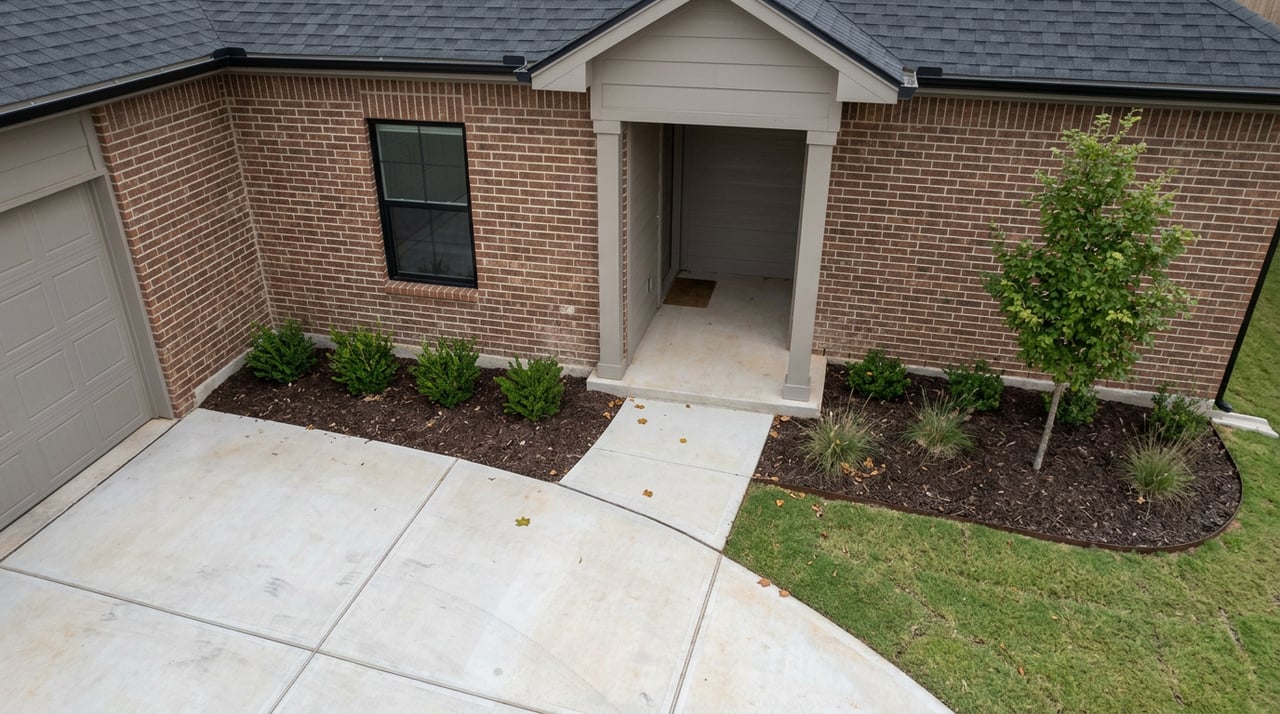
Red Lick's newer growth doesn't fit that exemption. One home marketed in the Red Lick Ranch Subdivision sat on roughly 0.58 acres, a typical size for the platted lots filling in along Farm Road 2148. Half an acre is nowhere near the 10-acre threshold. So a brand new home in Red Lick's newest subdivision carries full septic permitting exposure, while an older farmhouse a mile away on a large tract might not need a permit at all. The paradox: the more "developed" and closer to town a Red Lick property looks, the more likely it is to be fully regulated on septic, not less.
Here is what that split looks like in practice:
| Legacy home on 10+ acres | New build on a subdivision lot (like Red Lick Ranch) | |
|---|---|---|
| Setback flexibility | More room to meet distances from wells, lines | Tighter lot lines make setbacks harder to clear |
| Typical permit review | N/A if exempt | 2 to 4 weeks through the local permitting authority |
It only removes the permit paperwork for the specific property that qualifies. If you're buying on a smaller platted lot, assume the paperwork applies to you.
Red Lick's average home value, as reported on the city's own site across its 306 single-family homes, sits at $310,304. That price point sits squarely in the range where FHA and VA financing is common, and those two loan types apply septic scrutiny that a cash buyer or a conventional loan might never trigger.
Per HUD's underwriting handbook for FHA loans, the appraiser is required to check for signs of septic failure, standing water, odors, or a system that appears undersized. If anything gets flagged, a full inspection by a licensed professional becomes mandatory before closing. The handbook also sets a specific distance rule: the well must sit at least 50 feet from the septic tank and at least 100 feet from the drain field. The Texas Septic Guide says VA loans apply a similar review through the appraiser's minimum property requirements.
That 100-foot drain field setback is worth sitting with. Septic Tank Hub says Texas state minimum under the septic rules is 50 feet from a private well to the nearest system component. A system can meet the state's baseline and still fail an FHA appraisal, because the federal standard for the drain field specifically is double the state minimum. On a half-acre lot, finding 100 feet of clearance between a well and a drain field is a real geometry problem, not a formality. This is exactly the kind of detail that surfaces late, after a buyer is already locked into a loan type and a closing date.
The single most useful thing a buyer can do in Red Lick before waiving the option period is pull the septic permit history on the specific property. The Texas Septic Guide says permits filed after September 1989 include a site diagram showing tank location, drain field layout, and the setback distances that were approved at installation. That document tells you, before you spend a dollar on inspection, whether the system as built even has a chance of clearing FHA or VA setback rules.
In Bowie County, that request starts with the county's own environmental health office. The Bowie County Fire Marshal and Health Inspections Department handles septic-related permitting locally, and a phone call with the property address, owner name, and legal description from the county appraisal district is usually enough to get a records search started. If the county can't locate a permit on file, especially for an older home, that's information too. A missing permit leaves you buying without documentation of what's actually in the ground.
Before you waive your option period, run through these:
Red Lick is not going to stop growing, and subdivisions like Red Lick Ranch are exactly the kind of development the city incorporated to manage on its own terms back in 1997. That civic independence is real. The tax rate is genuinely low, the school is genuinely local, and the city council genuinely sets its own rules. But none of that changes how wastewater leaves a half-acre lot. Buyers who treat Red Lick like a fully serviced Texarkana suburb are the ones most likely to hit a stalled closing three weeks into underwriting. Buyers who treat it like what it actually is, a small incorporated town built mostly on private well and septic infrastructure, are the ones who ask the right questions before they sign anything.
Does having a city government mean Red Lick has city water and sewer? No. Incorporation gives a community its own mayor, council, and local ordinances, but it does not automatically fund or require municipal utility lines. Many Red Lick properties, including new construction, still rely on private wells and septic systems.
If I'm paying cash, what happens if I skip the septic inspection? Skipping a septic inspection on a cash deal means you're accepting whatever condition the system is in, sight unseen.
Does an aerobic septic system change my closing timeline? It can. Aerobic systems require an active maintenance contract with a licensed provider, and confirming that contract is current, or arranging for a new one, is one more item that needs to close out before the transaction does.
If you're weighing a purchase in Red Lick and want a clear read on what a specific property's septic and well setup means for your timeline, Doris Morris Real Estate can walk through it with you before you're locked into a contract. Let's Talk Strategy.
This article is general information, not legal, tax or financial advice. Consult a qualified professional about your situation.
Stay up to date on the latest real estate trends.




Before you buy or sell with any other agency, connect with Doris Morris Real Estate. We welcome the opportunity to show you how our concierge approach and proven methods can positively impact your bottom line.